
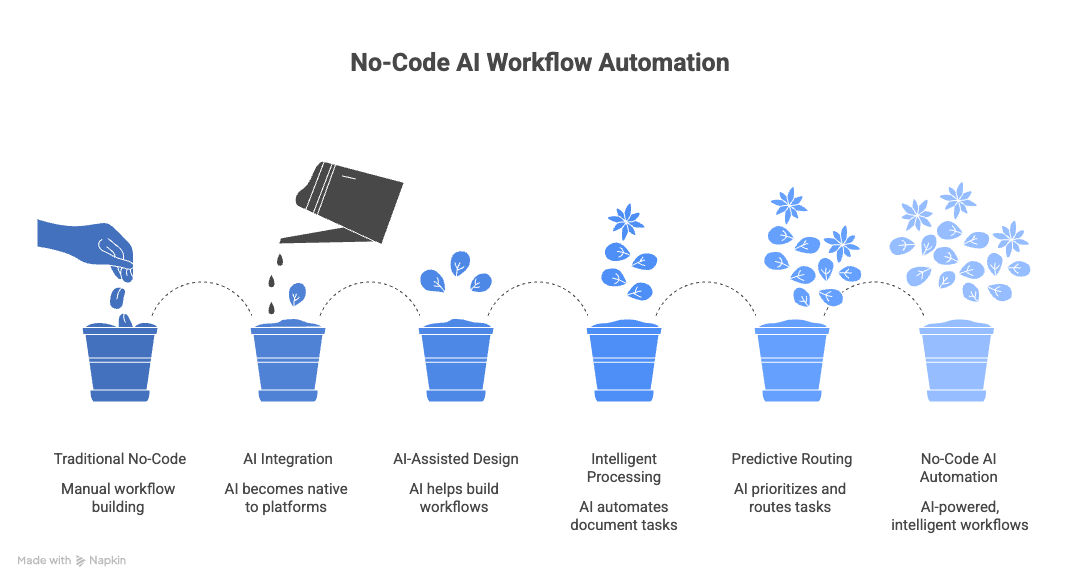
Streamline operations and boost efficiency by Automating business processes with no-code tools. Real-world insights for success.

The current business landscape demands agility and efficiency. Organizations, from small startups to large enterprises, constantly seek methods to optimize their operations without massive IT investments or specialized coding knowledge. This is where the power of no-code tools becomes evident, offering practical solutions for daily operational challenges. My experience working with diverse businesses, including many in the US, has shown a clear pattern: those who embrace these platforms gain a significant competitive edge by allowing their teams to build sophisticated automations themselves. It’s about empowering the people closest to the processes to improve them.
Overview
- No-code tools enable business users to automate tasks without writing code, fostering greater operational agility.
- Successful implementation relies on clear identification of repeatable, rule-based processes for automation.
- Key benefits include faster process execution, reduced manual errors, and significant cost savings.
- Choosing the correct no-code platform involves evaluating specific business needs, integration capabilities, and user-friendliness.
- Common no-code automation applications span marketing, sales, HR, finance, and customer service.
- Challenges like data integrity and security must be addressed through careful planning and governance strategies.
- The widespread adoption of these tools is driving a shift towards citizen development, empowering teams directly.
- No-code solutions are scalable, supporting growth from individual task automation to complex departmental workflows.
Setting the Stage for Automating business processes with no-code tools
For years, process automation was the domain of IT professionals and expensive software implementations. This created bottlenecks, slowing down innovation and reaction to market changes. No-code tools have democratized this capability, putting process improvement directly into the hands of business analysts, marketers, and operational managers. This shift is not just about technology; it’s about a cultural change, fostering a mindset of continuous improvement and self-service.
From my perspective, the core of Automating business processes with no-code tools lies in identifying repetitive, rule-based tasks. Think about onboarding new employees, generating routine reports, sending follow-up emails, or managing inventory alerts. These are prime candidates for automation. When we started implementing these solutions for a regional manufacturing company, their administrative staff spent hours manually reconciling purchase orders. By using a simple no-code workflow tool, we cut that time by 70%, freeing them for higher-value work. The immediate return on investment (ROI) was clear and quantifiable, building strong internal advocacy for broader adoption.
Selecting the Right Tools and Strategy for Your Business
The market offers a wide array of no-code automation platforms, each with its strengths. Choosing the right tool requires understanding your specific business needs, existing tech stack, and the technical aptitude of your team. Some platforms excel at simple task automation, like Zapier or Make (formerly Integromat), connecting disparate applications. Others, such as Airtable or Smartsheet, offer robust database functionalities combined with workflow automation, ideal for managing projects or client data. For more complex internal operations, platforms like K2 or Nintex provide deeper process mapping and integration capabilities.
It’s crucial to begin with a clear strategy. Start small. Identify one or two high-impact, low-complexity processes that can be automated quickly. This builds momentum and demonstrates value without overwhelming your team. During a project with a rapidly growing e-commerce startup, we focused first on automating their customer service ticket routing. This reduced response times significantly and improved customer satisfaction metrics almost immediately. This initial success paved the way for automating product stock alerts and order fulfillment notifications, gradually expanding their digital footprint. Training and ongoing support for users are also vital to ensure sustained adoption and effective utilization of these powerful platforms.
Practical Applications: Automating business processes with no-code tools in Action
The practical applications for Automating business processes with no-code tools are virtually limitless across departments. In marketing, agencies often automate lead capture from website forms, synchronize data across CRM and email marketing platforms, and schedule social media posts. Sales teams use no-code to automate meeting scheduling, generate proposals, and send personalized follow-up sequences. Human Resources benefits from automated onboarding workflows, expense report approvals, and leave request management. Finance departments can automate invoice processing, budget tracking, and reconciliation tasks, reducing manual errors significantly.
Consider a small real estate firm in the US that struggled with managing client inquiries. Their agents spent valuable time manually entering leads into their CRM, sending initial information packs, and scheduling viewings. By implementing a no-code solution, they connected their website inquiry forms directly to their CRM, automatically created new client records, triggered email sequences with property listings, and even allowed clients to self-schedule viewings through an integrated calendar tool. This not only saved hundreds of hours per month but also improved the client experience, leading to higher conversion rates and a more streamlined operation. The key is to map out current processes, identify pain points, and then see where no-code can step in to simplify or accelerate.
Overcoming Obstacles and Scaling Automating business processes with no-code tools
While the appeal of no-code is strong, successful implementation involves addressing potential obstacles. One common challenge is data governance and security. As more processes become automated, ensuring data integrity, compliance, and proper access controls is paramount. My recommendation is to establish clear guidelines and protocols from the outset, involving IT teams where necessary, especially when dealing with sensitive information. Another hurdle can be managing integration complexities with legacy systems. While many no-code tools offer extensive connectors, some older systems might require custom API connections or intermediary solutions.
Scaling automation also demands a structured approach. Avoid creating isolated, fragmented automations. Instead, aim for interconnected workflows that support broader business objectives. For an organization I advised, initial no-code efforts were ad-hoc, leading to redundant automations and inconsistent data. We introduced a centralized platform for managing all automation projects, created a repository of best practices, and established a “citizen developer” network. This approach fostered collaboration, prevented duplication, and ensured that all new automations aligned with overall business strategy. This proactive management helps maintain efficiency and prevents a sprawl of unmanaged processes, ensuring the long-term success of Automating business processes with no-code tools.
About the Author


